
September 19, 2026 | Ladler Game Farm
The August 15, 2026 hatch continues to reach new stages of development at Ladler Game Farm.
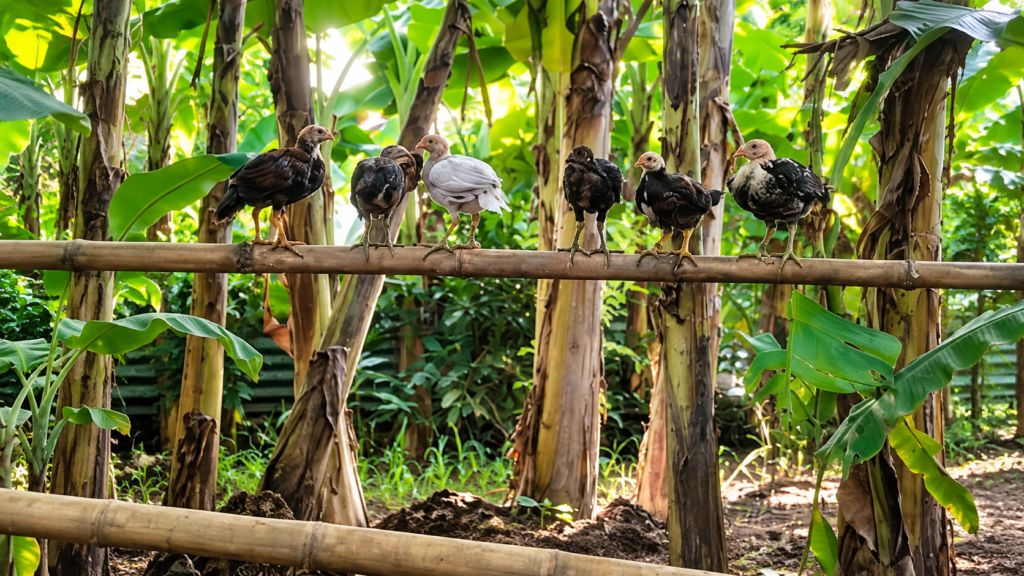
A little over a month ago, this batch was still emerging from the incubator. Today, the young birds are becoming increasingly active on the range—moving through the vegetation, scratching the ground, exploring their surroundings and looking for more to forage even after receiving their morning feed.
Along the way, the batch has also progressed through its early vaccination program, with the most recent milestone being its Coryza vaccination on September 15.
This update documents both their journey so far and what we are seeing on the range today.
From Hatch Day to the Brooder
The chicks hatched on August 15, 2026.
After hatching, they remained in the hatcher trays until the following morning, allowing them time to dry and settle before being removed.
On the morning of August 16, each chick was individually marked as part of our identification and record-keeping system. The batch then received its first vaccination against Newcastle disease and infectious bronchitis using B1 + IB vaccine before continuing into the brooding stage.
Those first days were focused on the basics: warmth, access to feed and clean water, observation and helping the newly hatched chicks establish themselves.
Early Vaccination Program
Preventive health management has accompanied the batch as it has developed.
Our vaccination record for the August 15 hatch so far:
| Date | Age | Health-management milestone |
|---|---|---|
| Aug. 15, 2026 | Hatch day | Chicks hatched and remained in hatcher overnight |
| Aug. 16 | Day 1 | Individual marking; B1 + IB vaccination |
| Aug. 23 | Day 8 | Gumboro vaccination |
| Sept. 3 | Day 19 | Fowl pox vaccination |
| Sept. 15 | Day 31 | Coryza vaccination |
| Next scheduled step | — | Coryza booster, following the vaccine’s recommended interval |
The vaccination program is only one component of health management. Nutrition, sanitation, appropriate housing, environmental management and daily observation remain important throughout the growing period.
For the upcoming Coryza booster, we’ll follow the specific manufacturer’s schedule for the vaccine being used, since booster timing can vary by product.
September 19 Update: Increasingly Active on the Range
Four days after their latest Coryza vaccination, today’s observation gives us another opportunity to document how the batch is progressing.
The birds are now noticeably more active and increasingly comfortable using the range.
Today’s Morning Feed
The August 15 batch actively moving around the range during the September 19 morning observation.
What makes today’s observation particularly interesting is that this activity came after their morning feeding.
They had already eaten.
Yet once they were out and moving around, they immediately began searching again.
Morning Feed Doesn’t End the Search
Instead of simply gathering around the feeding area after eating, the young birds spread out and began exploring.
They scratched at the ground, investigated vegetation and continued searching for additional things to eat.
Foraging After Morning Feed
Despite having received their morning ration, the developing birds continue searching, scratching and foraging around the range.
Their interest in foraging doesn’t mean their regular feed becomes less important.
At this stage of growth, a nutritionally appropriate formulated ration remains the foundation of their diet. What the range adds is an environment where they can move around and express behaviors such as scratching, investigating and searching for food.
From Adapting to Exploring
When we initially introduced the chicks to the mini-range, the objective was simply to allow them to gradually adapt to an outdoor environment.
Now we’re beginning to see a change.
They aren’t merely standing outside or remaining close to where they were released. They are increasingly using the available space.
Exploring the Range
The young birds are becoming increasingly confident exploring and foraging throughout their environment.
The range exposes them to conditions very different from the controlled environment of their early brooding period—more room for movement, soil, vegetation, sunlight and a constantly changing environment to investigate.
Watching how they respond to each new stage also gives us information that can help improve our management of future batches.
The birds we are watching today are still very much developing chicks. Increased activity at this age is something worth documenting, but it is far too early to use it alone to make conclusions about how individual birds will ultimately develop.
For now, the objective remains straightforward: provide the environment, nutrition, preventive health management and daily care that allow the batch to continue developing—and keep good records of what we observe along the way.
The Next Stage
The next vaccination milestone planned for this batch is the Coryza booster.
Beyond that, their development on the range will continue to be documented as they grow. We’ll be watching changes in size, feathering, condition, feeding and foraging behavior, range adaptation and overall health.
Each update becomes another piece of the record for this generation—and another opportunity to learn what we can improve in the next one.
From hatcher to brooder. From brooder to range.
And the journey continues.
LADLERS GAME FARM
Part of The Ladler’s Ladder
Discipline breeds better tomorrow.