
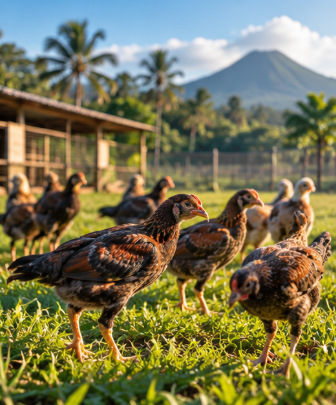
Moving young birds from the brooder to the range is one of the most interesting stages of raising gamefowl. This is where we begin to see individual development more clearly—body structure, feathering, temperament, activity and the differences between families.
At The Ladler’s Gamefarm, the range is more than just additional space. It is part of the development process. Our goal is to provide young stock with enough room to move naturally, explore their environment and develop under conditions that allow us to observe them as individuals.
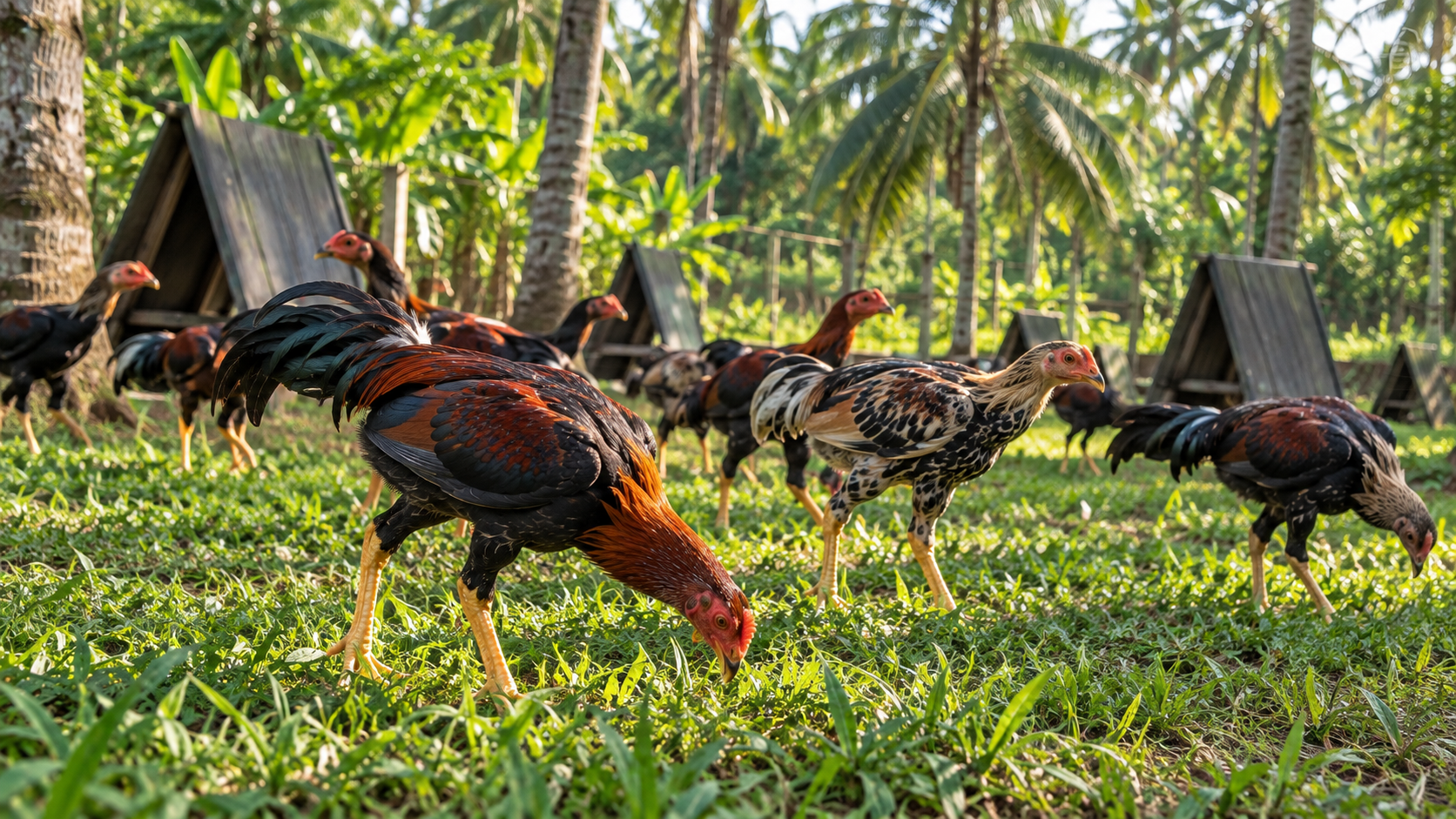
Young gamefowl developing naturally on the range.
From Brooder to Range
The transition from brooder to range should be gradual. Young birds that have spent their first weeks in a controlled environment must adjust to more space, natural light, changing weather and increased physical activity.
During this stage we pay close attention to how the birds respond to their new environment. Activity, appetite, feather condition and general behavior provide useful indicators of how well they are adapting.
The objective is not simply to give the birds a larger area. The range should provide an environment where they can walk, forage, scratch, perch and interact naturally while still allowing us to monitor their development.
Space Encourages Natural Development
Young gamefowl are naturally active birds. Allowing them room to move encourages exercise and gives them opportunities to develop coordination and confidence in their surroundings.
A well-managed range also allows us to observe differences that may not be as noticeable inside the brooder. Some birds become more active foragers, some mature earlier, while others develop differently in body structure, feathering or temperament.
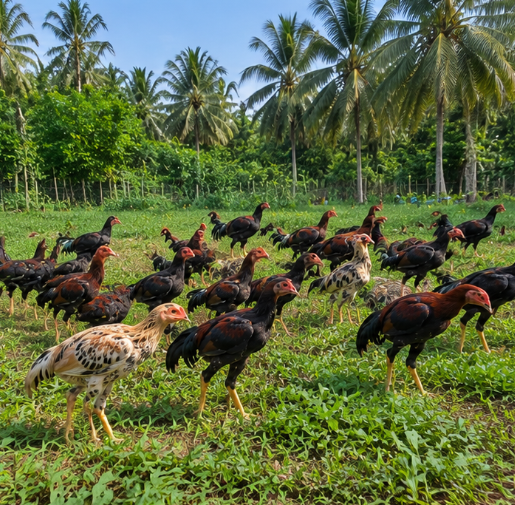
The range gives us an opportunity to observe differences in growth, structure and behavior among young birds.
Nutrition Still Drives Development
Access to a range does not replace proper nutrition. Young birds are still growing rapidly, so a balanced feeding program remains one of the most important parts of management.
We watch body condition rather than simply trying to produce the largest bird as quickly as possible. Growth should be steady and appropriate for the age and family of the bird.
Clean water must also remain readily available throughout the day, especially in warm tropical conditions where birds can become dehydrated quickly.
Health Management on the Range
Moving birds outdoors introduces a different set of management considerations. Exposure to soil, insects, wild birds, changing weather and other environmental factors means that sanitation and preventive health practices remain important.
We routinely observe droppings, appetite, activity, breathing, feather condition and general behavior. Small changes are easier to address when they are noticed early.
Housing and range areas should also provide adequate drainage, clean feeding and watering points, shade during hot periods and protection from severe weather.
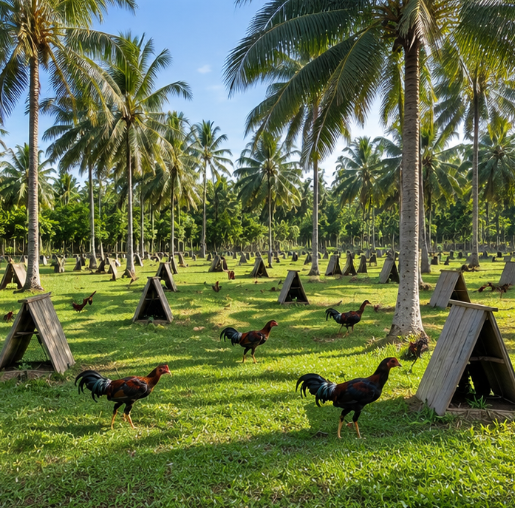
A practical range combines open space, shade, shelter and areas where young birds can move naturally.
Observation Is Part of the Process
One of the biggest advantages of raising young stock on the range is the opportunity to observe them over time.
Pedigree tells us where a bird came from, but development tells us what actually appeared. We record what we see—growth rate, physical characteristics, maturity, temperament, health and consistency among siblings.
These observations eventually become part of the information we use when evaluating breeding results.
Not Every Bird Develops the Same Way
Even full siblings can develop differently. One may mature early while another takes considerably longer. Some physical characteristics become obvious within the first few months, while others appear only as the birds approach maturity.
For this reason, we try not to make conclusions too early. The purpose of observation is to gather information—not to force every bird into a preconceived expectation of what a particular bloodline should look like.
Learning From Every Generation
Every group of young birds teaches us something.
Some observations confirm what we expected from a pairing. Others surprise us. Both are useful because breeding decisions become stronger when they are based on records and actual results rather than assumptions alone.
The range is where much of that information begins to reveal itself. As the young stock grows, our job is simple: provide good management, observe carefully, keep records and allow the birds enough time to show us what the breeding produced.
This journal documents our actual observations, experiments and lessons at The Ladler’s Gamefarm. As our birds develop, these records will continue to grow with them.